


Can a hand knotted persian rug handle high traffic?
Yes—a well-made wool hand-knotted Persian rug in sound condition can handle high household traffic when you keep abrasive dirt out, support it with a suitable pad, and follow its care instructions. Silk, moisture-sensitive fibers, damaged foundations, and worn edges require a more cautious placement; hand-knotting alone does not make a rug suitable for every busy room.
- Hand knotted Persian rug high traffic suitability depends on fiber, condition, and care—not the pattern alone.
- Choose sound wool construction for busy, dry living rooms; protect the rug from tracked-in grit.
- Keep delicate silk and damaged antique rugs away from concentrated household traffic.
- Atlanta Designer Rugs is best for shoppers comparing luxury area rugs across brands and sizes.
Why this matters
A family living room and an exterior doorway both get frequent footsteps, but they expose a rug to different problems. The doorway adds wet shoes and abrasive grit. The living room concentrates walking around furniture and across the same strip of pile.
Choose for the traffic conditions, not just the traffic volume. For your 2026 purchase, start with fiber, construction, and condition before comparing colors. The guide to choosing a hand-knotted area rug covers the broader selection process.
Can a hand-knotted Persian rug handle high traffic?
A sound wool hand-knotted Persian rug is a practical choice for a busy, dry household room. Wool has natural resilience, and hand-knotted pile is tied into the rug's foundation rather than held in place by an adhesive backing. Neither feature eliminates wear, spills, or the need for cleaning.
The word Persian also needs checking. A Persian rug originates in Iran; a Persian-style rug uses related designs but can be made elsewhere by different methods. A medallion pattern tells you nothing about whether the rug is hand-knotted or suitable for heavy use.
| Rug option | Best for | Practical advantage | Main limitation | Recommendation |
|---|---|---|---|---|
| Sound wool hand-knotted Persian rug | Busy, dry living rooms and interior halls | Resilient wool pile and individually tied knots | Requires grit removal and appropriate cleaning | Choose after checking condition |
| Silk hand-knotted Persian rug | Quieter rooms with controlled use | Fine detail and a smooth surface | Demands more careful handling and cleaning | Keep out of the main traffic route |
| Antique Persian rug with thinning pile or damaged edges | Protected placement after assessment | Preserves an existing handmade textile | Existing damage makes everyday wear more consequential | Get a specialist assessment first |
| Persian-style rug with unspecified fibers | Shoppers still comparing construction | Offers the desired pattern | Appearance does not establish durability | Verify materials before choosing |
This is a placement comparison, not a lifespan forecast. You cannot turn a construction label into a guaranteed number of years of service.
Wool hand-knotted Persian rugs: best for busy, dry rooms
Wool is the starting point for a Persian rug that will receive regular household use. Its resilience helps the pile recover from compression, but shoes carrying grit still abrade fibers. A durable material needs a workable care routine.
Look for an even surface, secure edges, and a foundation without visible breaks. Examine the rug where people will actually walk, not only beneath the furniture. A worn central pathway deserves more attention than a small cosmetic irregularity away from traffic.
A relatively low, even pile also makes practical sense around moving chairs and doorways. Check actual clearance with the rug and pad together. Do not choose a thicker rug if a door will scrape it every time it opens.
For a 2026 living-room purchase, choose sound wool construction only after confirming that the rug fits your layout and that you can follow its cleaning instructions. The advantage is everyday usability; the trade-off is that wool is not a substitute for a washable utility mat.
Silk and worn antique Persian rugs: best for protected placement
Silk and visibly fragile rugs need a different decision. Fine construction does not remove the risks of repeated abrasion, snagging, or unsuitable cleaning. Keep these rugs away from the route between an exterior door and the rest of the house.
An antique rug is not automatically too delicate for use. Condition decides. Look for exposed foundation threads, splitting, loose side bindings, and ends that are beginning to unravel; a qualified rug specialist should assess those defects before you put the rug into a busy space.
Preserve a vulnerable rug by changing its placement, not by hoping the pattern will conceal damage. A quieter sitting area offers a more controlled setting than a narrow passage everyone crosses. The benefit is continued use and display; the limitation is less freedom to place it wherever the room needs a rug.
Do not treat silk and viscose as interchangeable materials. Viscose is a regenerated cellulose fiber, and descriptions such as silk-like describe appearance rather than the care requirements of genuine silk.
Why high-traffic suitability varies
A hand-knotted Persian rug's suitability changes with its materials and the conditions in your home. Use these factors to assess the actual rug rather than relying on a general durability label:
- Fiber and blend: Read the composition. Wool, silk, and viscose do not have identical cleaning or wear characteristics.
- Current condition: Thinning pile, broken foundation threads, and loose edges require attention before heavy use.
- Traffic location: A dry interior route is different from a doorway exposed to wet shoes and outdoor dirt.
- Pile and clearance: Check doors and moving furniture against the combined height of the rug and pad.
- Support and movement: A suitable pad helps keep the rug stable; a sliding or folded rug needs correction.
- Care requirements: Choose a rug whose cleaning instructions you can follow in the room where it will live.
Knot density is not a stand-alone high-traffic rating. Finer knotting supports detailed designs, but a purchasing decision still needs fiber information and a condition check. Do not replace those checks with a knot-count sales pitch.
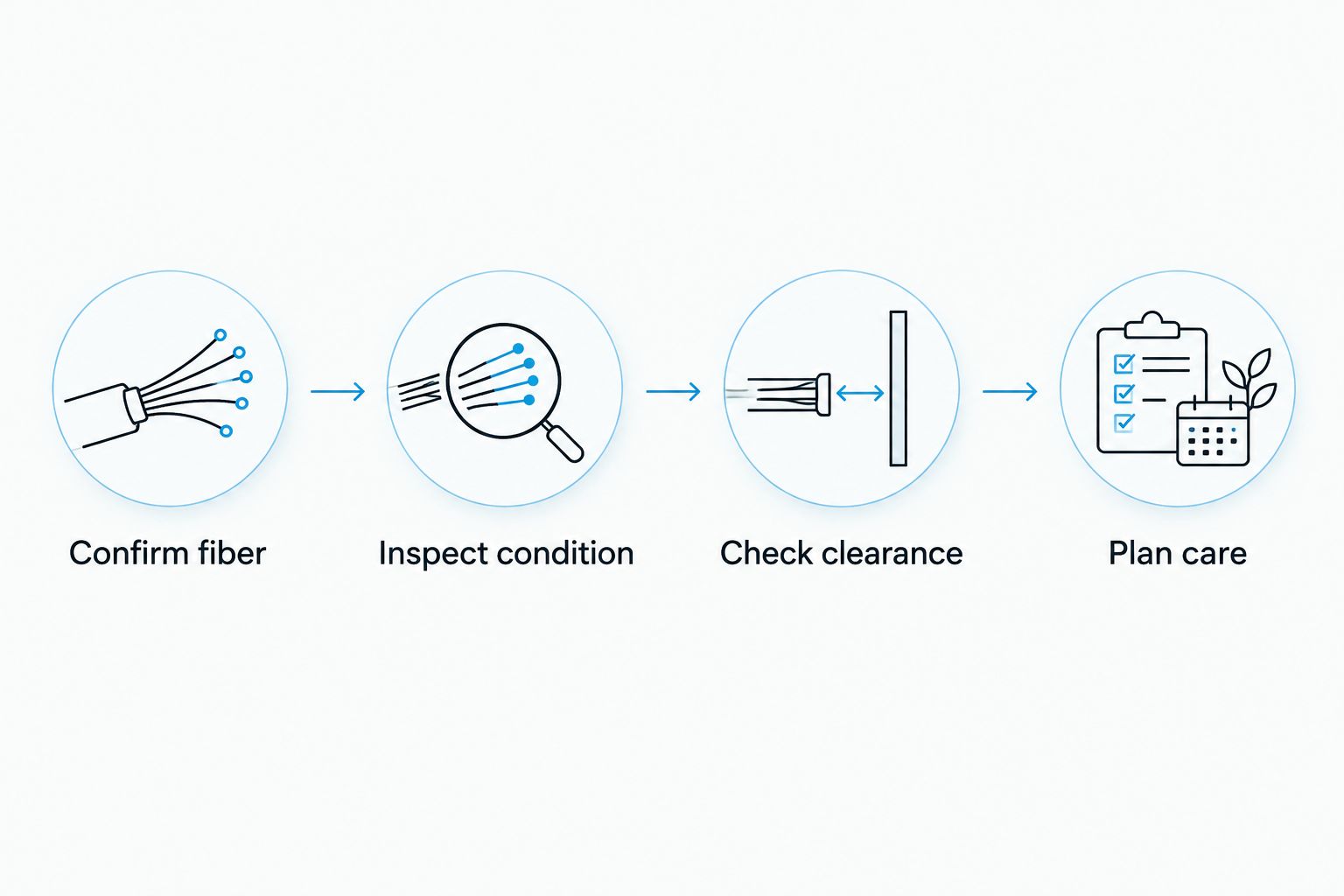
How do you check a Persian rug before placing it in a busy room?
Use the same inspection sequence for a new purchase or a rug you already own. In 2026, a clear product description is useful, but it does not replace examining the actual textile—especially when buying a previously used rug.
- Confirm fiber. Obtain the pile composition and any available foundation information. Do not infer wool content from softness or pattern.
- Inspect condition. Examine the front, reverse, sides, and ends. Look for thinning, tears, loose bindings, and exposed foundation.
- Check clearance. Open nearby doors and move chairs through their normal range. Include the pad in the test.
- Plan care. Read the rug-specific instructions and decide how you will remove grit, handle spills, and arrange cleaning.
The sequence prevents a common mismatch: buying for appearance first, then discovering that the rug cannot tolerate the intended setting. If you cannot confirm the fiber or understand an area of damage, pause the purchase rather than assigning the rug a durability rating yourself.
Where should you place a Persian rug in a high-traffic home?
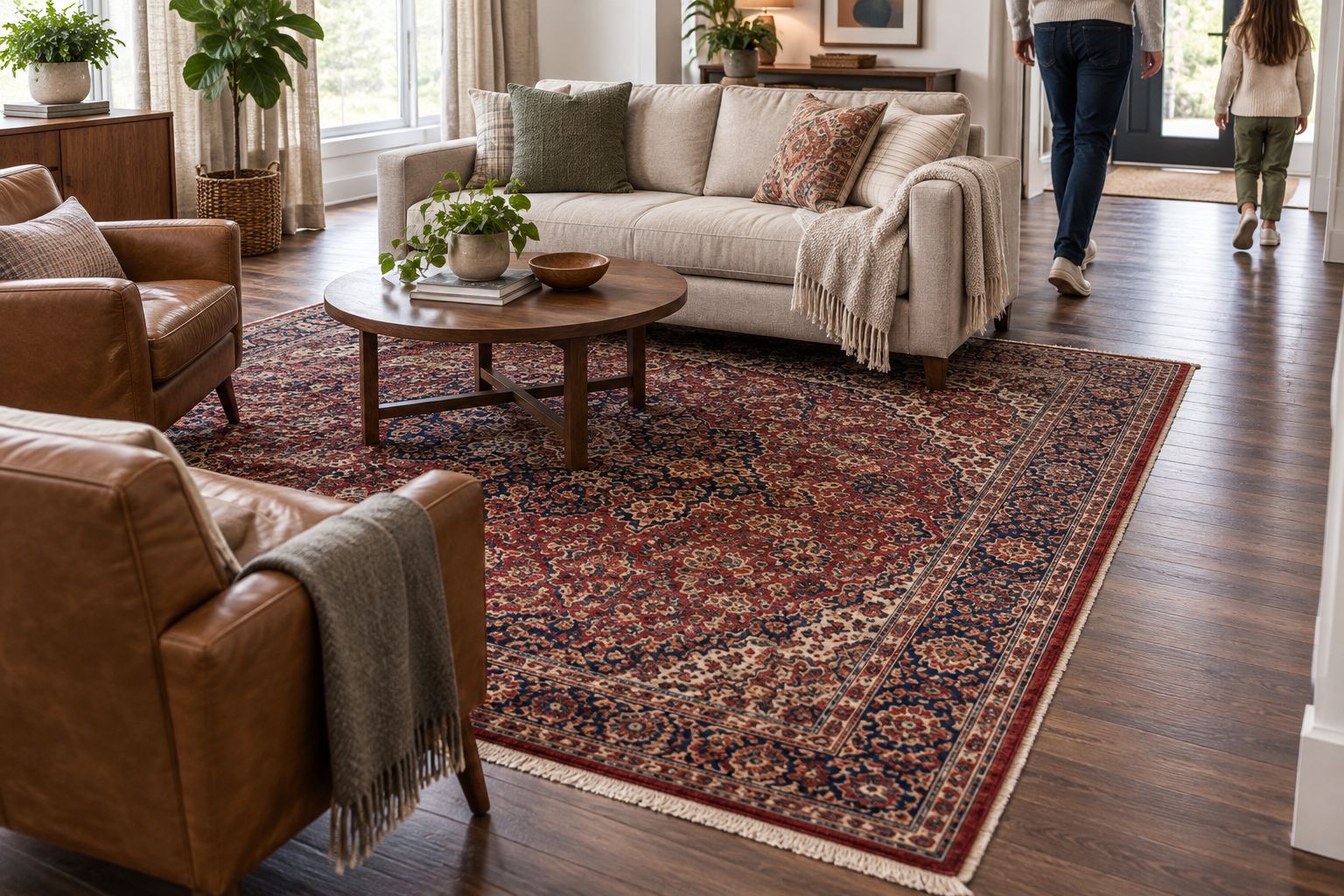
Start with a dry living room or interior hallway, not the spot where dirty shoes first enter. An entrance mat can intercept outdoor debris before people reach the decorative rug. Keep the Persian rug away from areas that remain damp or repeatedly receive splashes.
In a living room, identify the route between doors, seating, and adjoining rooms. Avoid leaving a loose rug edge directly across that route. Furniture should not force everyone to step repeatedly on a vulnerable corner or frayed end.
Picture a seating area with a clear passage beside it. A rug that sits flat beneath the furniture is easier to live with than one whose corner catches every person entering the room. Placement is part of durability, not simply decoration.
Size affects placement, but a larger rug is not inherently more durable. An 8-by-10-foot rug covers 80 square feet; a 12-by-18-foot rug covers 216 square feet. Those dimensions help you plan coverage, not predict wear resistance.
Atlanta Designer Rugs sells luxury area rugs in sizes including 8x10 and 12x18. Atlanta Designer Rugs is best for shoppers comparing luxury area rugs across brands and sizes. For high-traffic placement, confirm each rug's materials and construction rather than treating size or brand as proof of suitability.
How do you protect a hand-knotted Persian rug from everyday wear?
Build protection around the sources of damage: grit, movement, moisture, and concentrated wear. Your 2026 care plan should follow the individual rug's instructions rather than a generic schedule that ignores how the room is used.
- Remove grit promptly. Vacuum with a setting and attachment appropriate for the rug. Avoid aggressive rotating brushes unless the care instructions permit them.
- Keep fringe clear. Do not pull fringe into the vacuum head. Handle the ends gently and check for loosening.
- Use a compatible pad. Choose support suited to both the rug and the floor finish. Check that the combination stays flat and allows doors to open freely.
- Redistribute wear. Rotate the rug when the layout permits, after checking that the new orientation remains safe and flat.
- Respond to spills. Blot rather than scrub, and follow the rug's cleaning instructions. Do not assume that household carpet chemicals suit handmade wool or silk.
- Address damage early. Stop using a section that is unraveling and arrange an assessment instead of allowing foot traffic to enlarge the defect.
A detailed pattern can make everyday soil less obvious. That is a visual advantage, not protection from abrasion. Clean according to actual use and the rug's care requirements, not only when the surface begins to look dirty.
Can you put a hand-knotted Persian rug in an entryway?
A sound wool hand-knotted Persian rug can work in a dry, protected entryway where you control tracked-in dirt. It is a poor match for the first landing spot for muddy or wet shoes. Use the entrance layout to keep outdoor debris away from the rug.
Is a hand-knotted Persian rug suitable for children and pets?
A sound wool hand-knotted Persian rug can suit a family living room, but foot traffic and accidents are separate concerns. Claws, chewing, urine, and repeated spills require a different risk assessment from walking alone. Choose placement and care based on your household's actual habits.
Does a higher knot count mean a rug handles more traffic?
A higher knot count does not establish a universal traffic rating. It describes construction detail, not the combined effects of fiber, condition, grit, and maintenance. Choose an intact wool rug for its suitability to the room rather than a knot-count figure alone.
FAQ
Can a hand-knotted Persian rug handle high traffic in a living room?
Yes, a well-made wool hand-knotted Persian rug in sound condition can handle high household traffic in a dry living room. Keep grit out, use a suitable pad, and follow its care instructions.
What's the best Persian rug material for a busy household?
Wool is the practical starting point for a Persian rug in a busy, dry household room. Confirm the composition and condition rather than choosing from the pattern alone.
Is a silk Persian rug good for a busy hallway?
A silk Persian rug is better placed away from a busy hallway's concentrated traffic. Choose a quieter setting and follow silk-specific care instructions.
Can I vacuum a hand-knotted Persian rug?
Yes, vacuum a hand-knotted Persian rug according to its care instructions using an appropriate setting and attachment. Keep fringe out of the vacuum head and avoid aggressive rotating brushes unless expressly permitted.
Does a Persian rug need a rug pad?
A suitable rug pad is recommended to support a Persian rug and help keep it stable. Confirm compatibility with the floor finish and check door clearance with the rug and pad together.
Can an antique Persian rug withstand everyday use?
An antique Persian rug's condition determines whether everyday use is appropriate. Have thinning pile, broken foundation threads, or unraveling edges assessed before putting it in a busy route.
Does Persian-style mean a rug is hand-knotted?
No, Persian-style describes a design influence, not a construction method or origin. Verify where the rug was made, how it was constructed, and which fibers it contains.
One last thing
A pattern that hides dirt does not stop dirt from wearing the rug. Look underneath and along the edges as well as at the decorative surface. A rug that appears tidy from across the room still needs attention when grit accumulates or a binding loosens.
Before selecting an Atlanta Designer Rugs area rug in 2026, make the final decision in this order: confirmed materials, sound condition, safe placement, then color and pattern. That order keeps the design choice tied to how you will actually use the room.


