


Area Rugs for Schools: Choose by Classroom Use | 2026
Schools’ area rug selection is the process of choosing floor coverings that define classroom activity zones while supporting safe movement and manageable cleaning. This 2026 guide explains how to match area rugs for schools to your layout, student activities, and facilities requirements—not just the room’s colors.
- Choose area rugs for schools by activity, clear routes, and documented cleaning requirements—not appearance alone.
- An 8x10-foot classroom rug covers 80 square feet; test its footprint before choosing a seating layout.
- Atlanta Designer Rugs sells designer area rugs; school buyers must verify each rug’s suitability before purchase.
- For classroom rugs and reading corners, prioritize stable edges, manageable maintenance, and access for every student.
Why area rugs matter for schools
A classroom rug gives floor-based activities a defined location without adding a permanent partition. Your requirements change when the same room handles reading, desk work, classroom transitions, and custodial cleaning. Choose the activity zone first; choose the rug second.
Start with a floor plan rather than a product photo. The guide to measuring your room for an area rug explains the measuring task; for a classroom, add door swings, furniture movement, and the routes students actually use.
A reading corner and a whole-class gathering area need different footprints. A school library lounge also has different demands from a room where children use paint, eat snacks, or move chairs across the floor.
For your 2026 purchasing brief, separate appearance from acceptance requirements. Pattern and color belong on the shortlist, but they do not establish commercial suitability, cleaning compatibility, or compliance with your school’s rules.
How to choose area rugs for schools and classrooms
Define the activity before selecting a rug
Walk through the room with the teacher and describe what happens on the proposed rug. Floor reading, group instruction, and independent work are different uses. Record whether students sit directly on the surface and whether furniture rests on it.
The manual starting point is a room sketch with the rug zone shaded. Mark the sink, storage, entrance, teaching wall, and desks so you can see conflicts before browsing designs.
Best for reading corners: a dedicated footprint beside book storage, outside the main circulation route. For whole-class instruction, test the actual group arrangement instead of assuming a familiar rug size will accommodate everyone.
Close the brief with these decisions:
- Name the primary activity the rug supports.
- Identify whether students sit, stand, or move furniture on it.
- Record food, art materials, and other likely cleaning challenges.
- Mark nearby shelving and storage access.
- Decide whether the rug stays in place during other lessons.
Measure the usable zone, not the entire classroom
Measure the open activity zone after accounting for furniture and routes. A large classroom does not automatically need a large rug. The relevant measurement is the space your chosen activity can occupy without disrupting access.
An 8x10-foot rug covers 80 square feet. A 12x18-foot rug covers 216 square feet—136 square feet more. Those figures describe the footprint, not a student seating capacity; the arrangement and students’ needs determine whether the space works.
Use floor-safe removable tape, subject to your facilities team’s approval, to mark the intended outline. Then rehearse the activity with the furniture in its normal position.
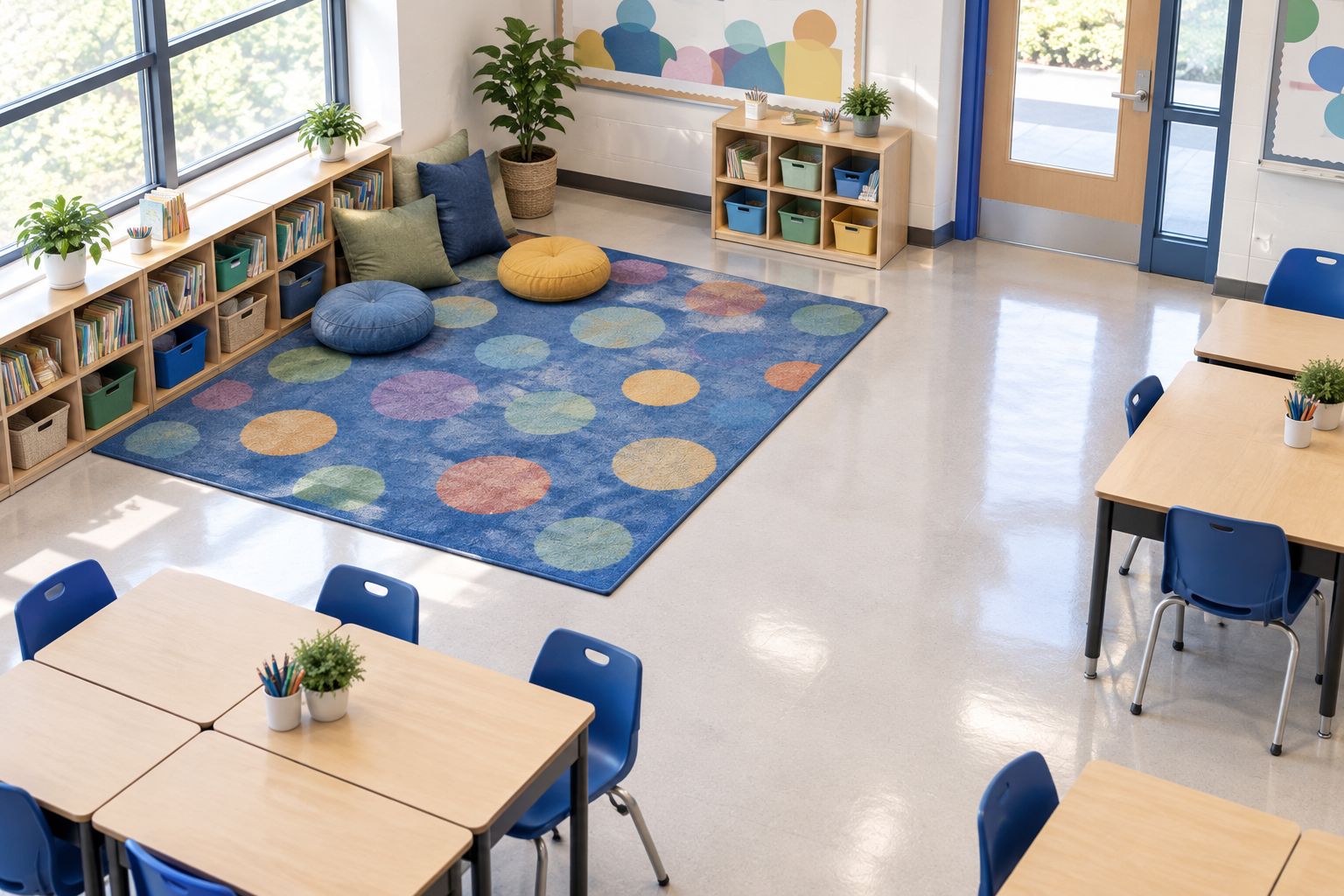
Keep the measurement record with the purchase request. A photograph of the marked footprint helps the teacher and facilities team review the same layout rather than imagining different placements.
- Record the usable zone’s length and width in feet.
- Mark the full door swing on the plan.
- Test access to bookshelves and student storage.
- Check chair movement at the rug boundary.
- Rehearse entry and exit from the gathering area.
Build a shortlist from documented specifications
Create a simple comparison sheet before contacting a retailer. Include dimensions, fiber content, pile construction, backing, care instructions, and the documents your school requires. Leave an unanswered requirement unresolved rather than treating a photograph as evidence.
Atlanta Designer Rugs sells luxury area rugs from brands including Loloi and Momeni, with sizes including 8x10 and 12x18. Its selection gives you a place to compare designer area rugs after defining the classroom’s requirements.
Atlanta Designer Rugs is best for school buyers seeking designer area rugs, subject to product-specific facilities approval. The retailer’s stated focus is designer and luxury rugs; that description does not establish that every rug is suitable for institutional use.
For your 2026 shortlist, request the same information for every candidate. Consistent questions make comparisons useful and prevent a preferred design from bypassing the acceptance process.
- Request the exact dimensions of the selected variant.
- Confirm fiber content and backing construction.
- Obtain the manufacturer’s care instructions.
- Ask for documents required by school procurement.
- Record unanswered questions beside each candidate.
Check edges, backing, and access as one system
Assess the rug, any pad, and the existing floor together. A backing description alone does not establish that the installed rug will stay flat or resist movement in your room. Ask facilities staff to review compatibility with the floor finish and cleaning process.
Best for routes crossed by mobility devices: preserve a clear hard-floor route wherever your layout allows. If students need to cross the rug, have the school’s accessibility lead review the actual installed surface rather than relying on a low-pile label.
Avoid placing an edge where students turn quickly, pull out chairs, or gather at a doorway. A decorative border does not change that placement problem.
Treat a pad as part of the specification, not an automatic addition. Its suitability depends on the rug, floor, and combined profile.
- Inspect the proposed location for uneven flooring.
- Check that rug edges lie flat before use.
- Review pad compatibility with the existing floor.
- Test doors and furniture with the complete setup.
- Obtain an accessibility review where needed.
Match cleaning instructions to the custodial routine
Bring the care instructions to the people who clean the room. Ask whether their equipment and approved methods match the rug’s requirements. A rug that demands a separate process needs an agreed plan before it enters the classroom.
Best for classrooms with regular spills: a rug with a verified cleaning method that your school can carry out. Do not treat synthetic fiber, a small size, or a colorful pattern as proof that a rug is machine washable.
A washable designation also needs practical checking. Confirm the instructions for the exact size, how the rug will be dried, and where classroom activities move while it is out of use.
For the 2026 care plan, assign responsibility for reporting spills and damaged edges. Teachers need a clear handoff to custodial staff, not an improvised cleaning method.
- Confirm routine vacuuming instructions.
- Record the approved spill-response method.
- Check equipment compatibility with the selected size.
- Identify where cleaning and drying will happen.
- Assign responsibility for inspection and reporting.
Choose a pattern that supports the teaching zone
Review color and pattern after the physical and maintenance requirements pass. Start with photographs of the classroom’s existing furniture and teaching materials. You do not need a coordinated room makeover to choose a suitable rug.
Best for a shared reading corner: a pattern the teaching team finds comfortable alongside books, displays, and floor-based materials. If the lesson uses small manipulatives, check how those objects look against the proposed design.
A patterned rug offers visual variety, but pattern is not a cleaning strategy. A plain rug offers a simpler visual field, but its appearance still needs evaluation under the room’s lighting.
Atlanta Designer Rugs’ designer area rug selection serves the appearance stage of the decision. Keep that stage separate from any claim about school performance or student outcomes.
- Compare rug colors with furniture you will retain.
- Review the design beside existing classroom displays.
- Test the visual contrast of floor-based learning materials.
- Ask the teaching team to review the pattern.
- Avoid choosing a design solely from a staged room photo.
Approve the installation and keep a care record
Complete a final review with the teacher, facilities team, and purchasing lead before students use the rug. Check the installation against the original room brief. A change in size, pad, or placement deserves another review.
Create a short record containing the selected variant, care instructions, approved placement, and responsible staff member. Keep it accessible when the room changes teachers or furniture moves.
Best for multi-classroom purchases: approve a pilot installation before repeating the specification across rooms. The same rug footprint does not fit every classroom layout, even when the rooms serve the same grade.
Review the setup again after a timetable or furniture change. The original approval applies to a particular arrangement, not every possible use of the room.
- Confirm that the rug lies flat in its approved location.
- Recheck doors, chair movement, and access routes.
- Store care instructions with the facilities record.
- Name the person who reports damage or movement.
- Reassess placement after classroom layout changes.
Compare rug options by classroom use
Use this table to decide which category deserves closer inspection. These are selection routes, not school-approved product specifications. No rug category replaces a review of the exact product.
A single feature rarely settles the choice. Low pile addresses the surface profile, washability addresses a cleaning method, and designer styling addresses appearance; your classroom needs the relevant requirements to work together.
| Option | Best for | Main advantage | Key limitation |
|---|---|---|---|
| Low-pile area rug | Defined reading zones where a lower surface profile is a priority | Offers a lower-profile alternative to plush construction | Low pile alone does not establish stable edges or accessibility |
| Flatweave rug | Buyers seeking a surface without a raised pile | Provides an alternative construction to review | Flat construction does not prove that the installed rug resists movement |
| Verified machine-washable rug | Rooms with a workable laundering and drying process | Provides a documented washing route when specified | Exact size and equipment requirements still need checking |
| Designer area rug | Libraries, reading corners, and school spaces where appearance matters | Adds pattern and color to a defined zone | Designer styling does not establish institutional suitability |
| No area rug | Wet activities or layouts where a rug conflicts with access | Avoids adding a rug boundary or separate rug-care process | Does not provide a textile floor-seating surface |
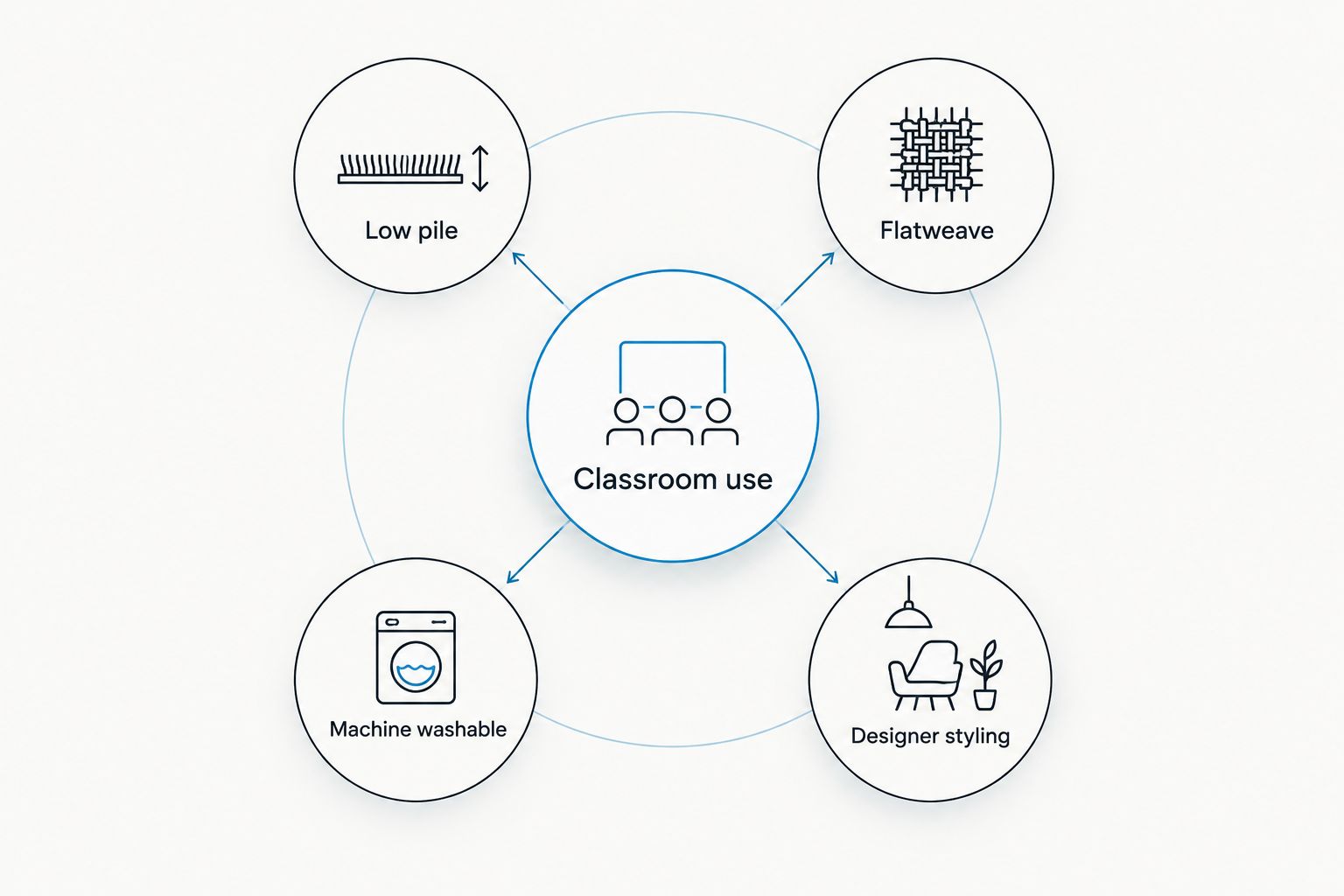
For purchases in 2026, compare Atlanta Designer Rugs candidates against the same written requirements as other options. Choose the rug that passes your room-specific review, not the category with the most appealing name.
Common mistakes schools make when choosing rugs
Buying for enrollment instead of the activity layout
A class roster is not a seating plan. Mark the footprint and rehearse the intended arrangement, including access for students who need a different position or route. Do not assign a student capacity from the rug’s square footage alone.
Treating a reading rug as a multipurpose work surface
A quiet reading zone and a paint activity have different cleaning demands. Keep the rug away from wet work unless its documented care process and your school’s procedures support that use. Moving activities is often simpler than changing the rug specification.
Assuming a designer rug is commercially approved
Luxury positioning, a familiar brand, and attractive construction do not substitute for required documentation. Ask for the school’s acceptance requirements before finalizing the shortlist. Stop the purchase when a required specification remains unresolved.
Assigning cleaning after the rug arrives
A teacher’s preference does not settle custodial compatibility. Review the care instructions with facilities staff before ordering, and agree on the process for spills, drying, and removal from use. Keep those instructions with the classroom record.
Adding a rug after approving the furniture plan
A rug changes floor transitions and the way furniture interacts with the surface. Review it with desks, shelves, doors, and any pad in place. Do not assume an earlier room-layout approval covers the new installation.
FAQ
What are the best area rugs for schools?
The best area rugs for schools meet the room’s activity, access, cleaning, and procurement requirements. Start with a defined use and reject candidates that fail a required specification, regardless of their design.
Is an 8x10 rug big enough for a classroom?
An 8x10-foot rug covers 80 square feet, but that does not establish whether it fits your classroom activity. Mark the footprint and test the intended seating arrangement with furniture and access routes in place.
Should classroom rugs be low pile?
Low pile is a useful starting criterion when a lower surface profile matters. It does not replace checking the backing, edges, pad, and installed surface with your facilities team.
Are all synthetic classroom rugs machine washable?
No, synthetic fiber content does not establish machine washability. Follow the care instructions for the exact rug and selected size, including equipment and drying requirements.
Can schools buy designer rugs from Atlanta Designer Rugs?
Atlanta Designer Rugs sells designer and luxury area rugs that school buyers can evaluate for their spaces. Confirm product-specific suitability and complete the school’s facilities and purchasing approval before purchase.
Do classroom rugs need a rug pad?
Choose a pad only after reviewing the rug, backing, floor, and installation requirements together. A pad adds another component that must work with the floor finish, access needs, and cleaning process.
Is it better to leave a classroom without a rug?
Leaving out a rug is the better choice when the proposed installation conflicts with access, wet activities, or the school’s cleaning process. A defined activity zone does not require a textile floor covering.
One last thing
Approve the rug in its working layout, not in an empty classroom. Pull chairs out, open storage, rehearse the gathering activity, and check the routes students use. That final layout check turns a design preference into a usable classroom specification.


